We curate handwoven wool textiles and sculpted wood pieces that carry the warmth, irregularities, and permanence of human making.
Materials shaped by climate and soil.
Morocco's geographical diversity, from snow-capped High Atlas peaks to arid desert foothills, defines the material palette of its craft. The wool of mountain sheep grows dense and high in natural lanolin, creating textiles with innate elasticity and insulation.
In coastal forests near Essaouira, the subterranean root burls of the indigenous Thuya tree form dense, swirling grain clusters filled with aromatic essential oils that resist moisture and time.
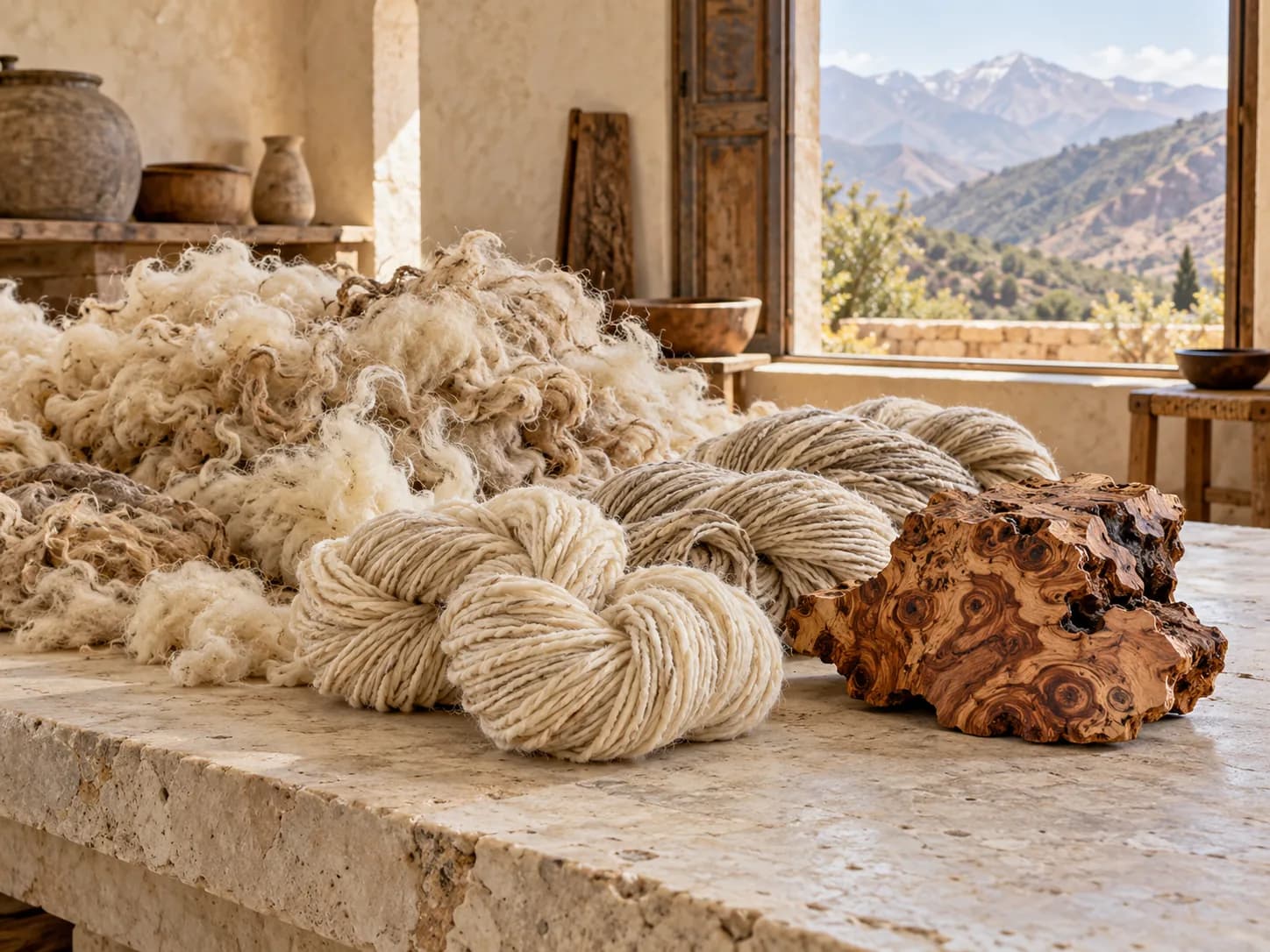
Fig. 01 · The Atlas
The marks of slow human rhythm.
Industrial products seek absolute uniformity. Handmade objects reflect the decisions, tension, and breathing rhythm of the individual artisan sitting before the upright loom or foot-powered lathe.
A line that wanders slightly across a Beni Ourain field, a knot tied with slightly more tension, or the natural burl eye of a wooden box are not flaws. They are the authentic signatures of human labor.
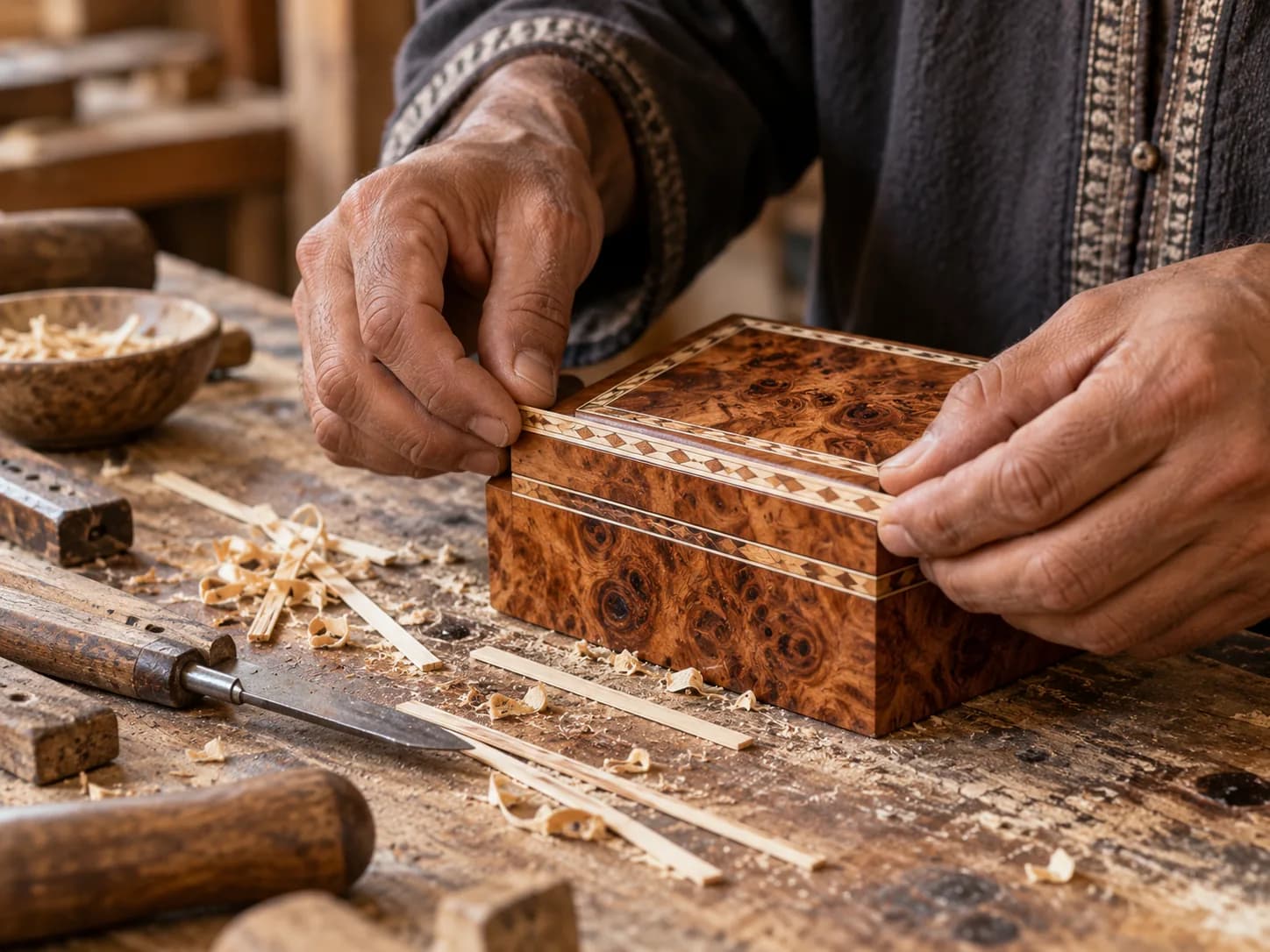
Fig. 02 · The Hand
Quiet grounding for modern spaces.
We believe ancestral craft belongs in contemporary architectural rooms. Paired with clean lines, linen upholstery, concrete, and minimalist timber furniture, a handwoven Moroccan rug brings acoustic warmth and tactile grounding.
These pieces are designed to be lived with, walked on barefoot, touched, and passed down as time deepens their patina.
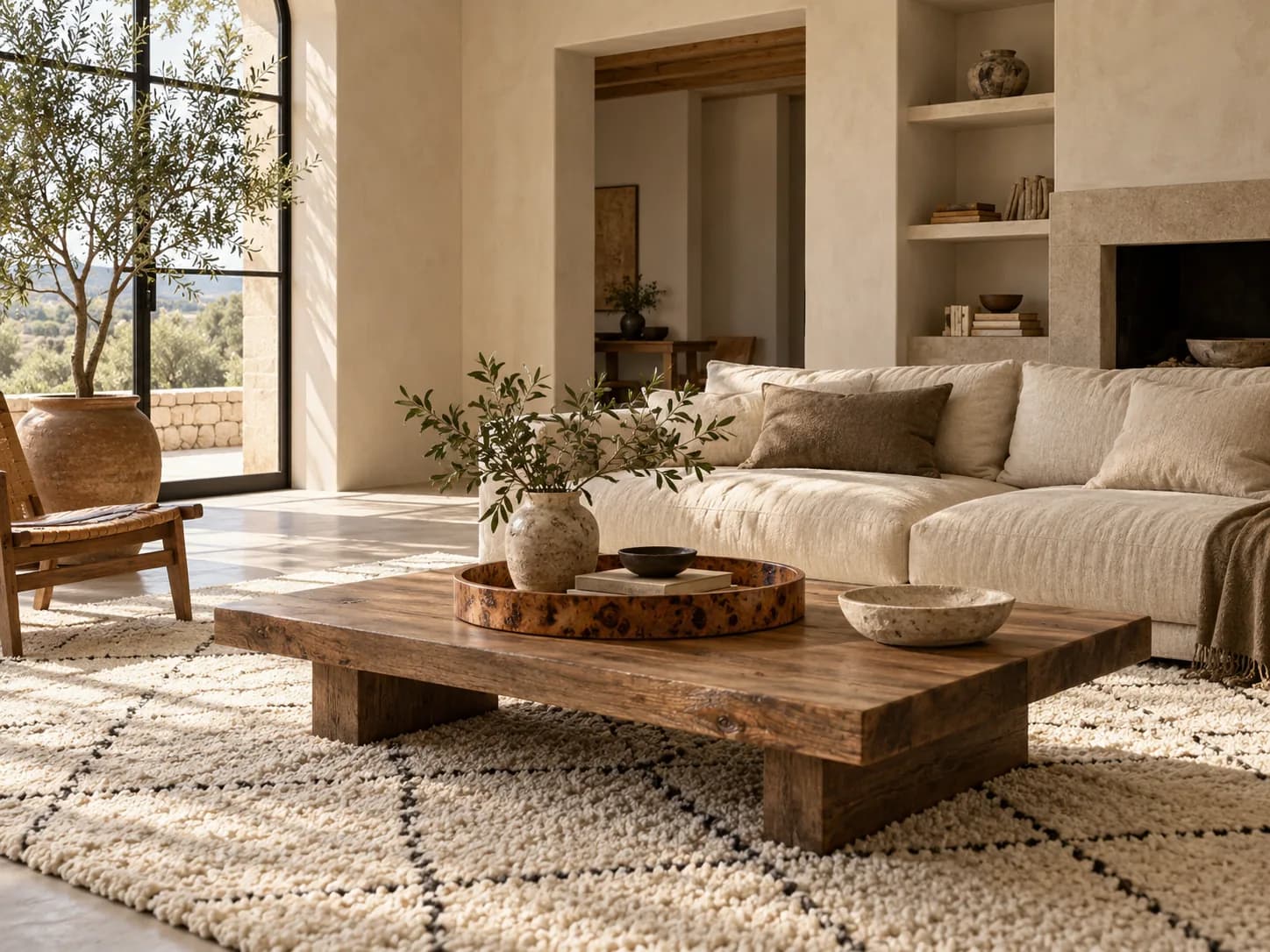
Fig. 03 · The Home